
From Coimbatore to Rajya Sabha’s Chair: The Rise of C. P. Radhakrishnan
- Jahan Soni
- Sep 12, 2025
- 4 min read
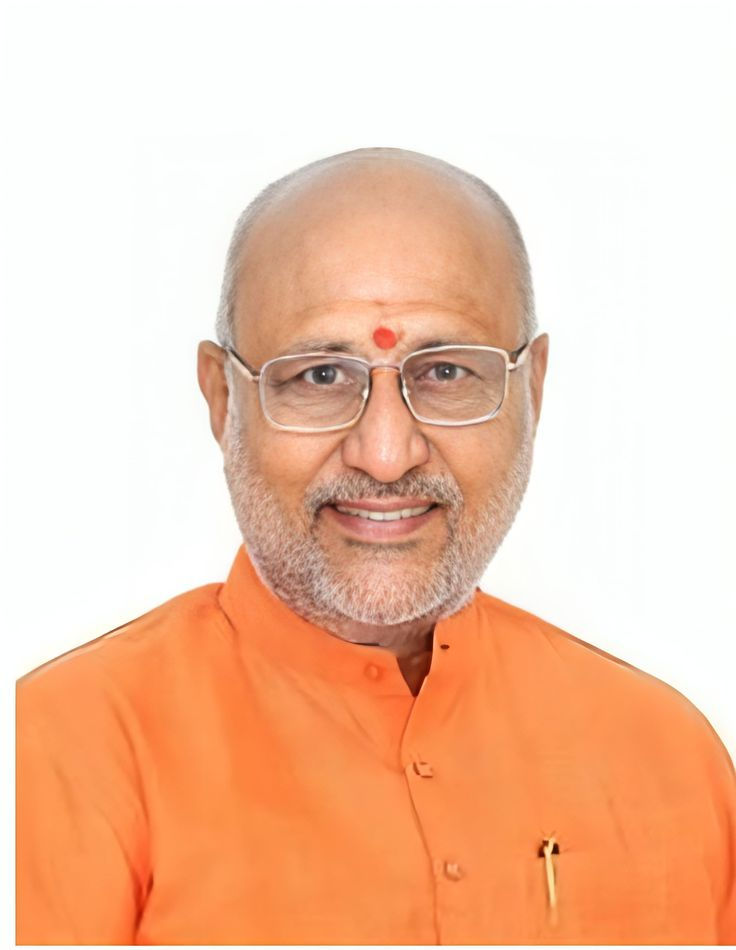
India has a new Vice-President. On 9 September 2025, C. P. Radhakrishnan was elected to the country’s second-highest constitutional office, defeating the INDIA-bloc nominee, Justice (Retd.) B. Sudershan Reddy. This election is not just a routine parliamentary exercise—it comes after an unusual mid-term vacancy and carries significant political and constitutional implications.
★Why is this news now?
1. Casual vacancy in July 2025. Vice-President Jagdeep Dhankhar resigned from office on 21 July 2025 (he cited health reasons). That resignation created a constitutional vacancy and required the Election Commission to schedule a vice-presidential election.
2. Election and result (9 Sept 2025). Voting in Parliament was held and the Returning Officer declared the result on 9 September 2025: C. P. Radhakrishnan won with a clear majority of the valid votes. The poll was closely watched because the Vice-President is the ex-officio Chairperson of the Rajya Sabha and the office shapes the conduct of Upper House proceedings.
3. Political reading: Beyond the formal outcome, analysts emphasised what the margin (and instances of alleged cross-voting/invalid votes) say about party discipline and the parliamentary arithmetic between NDA and the INDIA bloc. Several regional party decisions to abstain or not whip votes also affected perceptions of the result.
Who is the new Vice-President? — C. P. (Chandrapuram Ponnusamy) Radhakrishnan
Basic identity & immediate fact: C. P. Radhakrishnan, a senior BJP leader from Tamil Nadu and (until recently) Governor of Maharashtra, is the NDA’s Vice-President-elect. He secured 452 votes against the INDIA bloc’s candidate who secured 300 (752 valid votes; 15 invalid).
Political & public life — a concise profile
Chandrapuram Ponnusamy Radhakrishnan; born in Tamil Nadu (Kongu region). He is a long-time RSS swayamsevak and one of the BJP’s veteran leaders from the state.
Organisational background: Early RSS/Bharatiya Jana Sangh beginnings; prominent in BJP’s Tamil Nadu unit — served as State President of the BJP in Tamil Nadu (2003–2006) and has been closely associated with the party’s organisational work in the south.
Electoral career: Elected to the Lok Sabha from Coimbatore in 1998 and 1999; contested other national and state level fights and remained a prominent face of the BJP in Tamil Nadu.
Constitutional/constitutional-adjacent posts: After his parliamentary phase he was appointed to several gubernatorial roles — notably Governor of Jharkhand, short stints as Governor of Telangana and Lieutenant-Governor of Puducherry, and Governor of Maharashtra prior to the Vice-Presidential nomination. Those governor postings raised his national profile and made him a consensus choice within the NDA.
Perception & style: Media profiles describe him as an RSS-rooted, disciplined organiser with a reputation for being non-confrontational and administratively focused — qualities the NDA emphasised while projecting him as a unifying figure to preside over the Rajya Sabha.
★Who were the other contenders — the INDIA bloc and the wider field
Main rival: The INDIA (opposition) bloc nominated Justice (Retd.) B. Sudershan Reddy, a former judge of the Supreme Court of India and ex-Chief Justice of the Gauhati High Court. Justice Reddy’s judicial career (High Court judge, Supreme Court judge 2007–2011, and later roles such as Lokayukta) formed the core of the opposition’s argument that the Vice-Presidency should be held by someone with deep judicial credentials and independence.
Other formal candidates: For this election the contest was essentially between the NDA’s Radhakrishnan and the INDIA bloc’s Sudershan Reddy. (No significant third candidate made an impact on the count; the vice-presidential contest in India typically becomes a two-way face-off between the ruling coalition’s nominee and the opposition’s nominee.)
Tactical abstentions / cross-voting: Several regional parties (or individual MPs) either abstained or were reported to have abstained/invalidated ballots or cross-voted. Journalists and analysts noted that such behavior altered the final margin and became a post-poll talking point about opposition cohesion and regional party priorities.
★Constitutional and practical significance:
What the Vice-President does: Constitutionally the Vice-President is the ex-officio Chairperson of the Rajya Sabha (Articles 63–71) and is first in line of succession to the Presidency; when required, the Vice-President can act as President. The Chairpersonship of the Rajya Sabha gives the office real influence over procedure, adjournments, and the conduct of the Upper House.
Election method: The Vice-President is elected by an electoral college composed of members of both Houses of Parliament by proportional representation and single transferable vote (secret ballot). That makes the contest a test of numbers and inter-party arithmetic in Parliament.
★Immediate implications & what to watch next:
1. Rajya Sabha management: With an NDA nominee in the Chair, expect continuity with the government’s priorities in management of House business — though the Chairperson’s role is supposed to be impartial; how Radhakrishnan manages contentious references, suspension/discipline and procedural disputes will be watched.
2. Opposition strategy: The INDIA bloc has framed the contest as an ideological battle; the defeat shifts them to opposition posturing but also to questions about internal cohesion and the ability to convert public-positioning into parliamentary arithmetic.
3. Precedent of mid-term VP election: This was an unusual mid-term contest (because of Dhankhar’s resignation). The handling of the casual vacancy, the timelines, and the political messaging around the resignation itself will remain topics of discussion.
★ *VIDHIGYATA INSIGHT*
The 2025 Vice-Presidential election is more than a routine vote:
NDA’s pick: C. P. Radhakrishnan brings administrative experience and party loyalty to the Rajya Sabha.
Opposition challenge: The defeat of Justice Sudershan Reddy highlights gaps in opposition unity.
Regional influence: Abstentions and cross-voting show smaller parties can sway outcomes.
Constitutional role: As Chairperson, the VP will shape legislative proceedings and parliamentary discipline.
Bottom line: This election reflects both political strategy and the practical importance of the Vice-Presidency.
★Sources & References:
Reuters: Coverage of C. P. Radhakrishnan’s victory and vote count.
Times of India / Economic Times: Live updates, analysis, and cross-voting insights.
Wikipedia & Public Profiles: Background and political journey of C. P. Radhakrishnan.
Supreme Court & Judicial Records: Career details of Justice (Retd.) B. Sudershan Reddy.


Comments