
Passive Euthanasia – A Legal Battle Between Life and Death
- teamvidhigyata
- Apr 1
- 6 min read

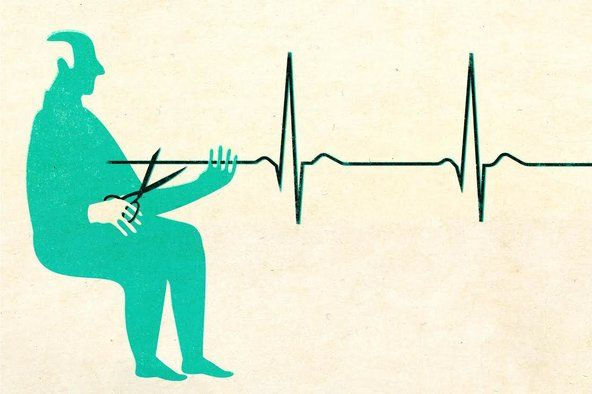
Is the act of preserving life always an expression of compassion, or can it occasionally turn into
an act of cruelty?
Introduction
Is it truly kind to keep someone alive? In certain scenarios, does this act lead to extended
suffering—not just for the patient but also for their family and caretakers? In an era where
technology can sustain bodily functions long after all hope has vanished, the pressing question
shifts from whether we can save a life to whether we should prolong suffering. Families often find
themselves powerless, witnessing a loved one endure unending pain, while medical professionals
navigate the delicate balance between sustaining life and alleviating suffering.
Passive euthanasia addresses this difficult reality—not aimed at causing death, but at facilitating a
dignified conclusion when life has lost its significance. It does not focus on ending a life; rather,
it involves recognizing when to cease inflicting suffering. Sometimes, despite exhaustive medical
interventions, recovery is unattainable, and machines merely sustain the body, not the individual.
In these circumstances, families and healthcare providers may elect to withdraw life support, halt
artificial nutrition, or refrain from resuscitating the patient. Distinct from active euthanasia, passive
euthanasia involves no direct actions to induce death; it permits life to conclude naturally, with
dignity, tranquility, and liberation from extended pain.
From Survival to Dignity: The Legal Evolution of Passive Euthanasia in India
India's stance on passive euthanasia has gradually evolved through various judicial rulings rather
than through a single legislative framework. Each case reflects genuine human distress, ethical
dilemmas, and the quest for dignity in life’s final stages. This evolution began with a crucial
constitutional inquiry—does the right to life encompass the right to die?
In the case of P. Rathinam v. Union of India, the Supreme Court initially determined that the
right to life includes the right not to live, especially in the context of criminalizing suicide attempts.
However, this perspective was revisited in the pivotal case of Gian Kaur v. State of Punjab. This
case emerged from a tragic incident where Gian Kaur and her spouse were found guilty of aiding
their daughter-in-law’s suicide under Section 306 of the IPC. They contested their conviction and
the constitutional validity of the law, arguing that if one has the right to die, assisting them should
not be deemed a crime. The Supreme Court dismissed this argument and overturned P.
Rathinam, asserting that the right to life under Article 21 does not extend to the right to die,
as life is a fundamental right and suicide represents an unnatural conclusion. Nonetheless,
the Court made a crucial remark—that in situations of terminal illness, the notion of dying with
dignity may fit within Article 21. This observation laid the groundwork for the eventual
acknowledgment of passive euthanasia.
Acknowledgment of Passive Euthanasia – A Significant Milestone
Aruna Shanbaug, a nurse, lived in a persistent vegetative state for almost forty years following a
violent assault. Her case prompted deep ethical and legal discussions regarding the essence of life
and dignity. Though the Supreme Court declined to withdraw life support in her specific case, it
took a groundbreaking step by legalizing passive euthanasia under stringent conditions.
The Court stipulated:
Approval from the High Court
Assessment by medical expert committees
Decisions based on the “best interest of the patient”
The ruling made a clear distinction between active and passive euthanasia, permitting the latter
while prohibiting the former. Most notably, it introduced the principle of the “best interest of the
patient.” In scenarios where patients cannot articulate their wishes, decisions must focus on
dignity, comfort, and relief from suffering, rather than merely maintaining biological life. This
case signified a substantial change in Indian law, moving beyond a strict interpretation of life
preservation to recognizing a more compassionate reality—that sometimes, extending life equates
to extending suffering.
The legal framework advanced further in Common Cause v. Union of India, where the Supreme
Court made a transformative ruling. It established that the right to die with dignity is encompassed
within the right to life under Article 21. This decision shifted the emphasis from simply prolonging
life to considering how individuals can experience their final moments with dignity. The Court
also acknowledged the concept of living wills (advance directives), enabling individuals to express
their preferences in advance regarding life-support measures if they become unable to
communicate or make decisions. In doing so, the Court provided individuals with something
profoundly significant—a voice, even in their silence. It ensured that at the end of life, a person's
dignity, autonomy, and sense of self are preserved and honoured.
Recent Advancements: A More Compassionate Legal Approach
The progression continued with the case of Harish Rana v. Union of India, which demonstrated
a shift towards a more practical and empathetic perspective. In this situation, the patient was in a
dire and irreversible medical state, reliant solely on artificial life support systems, including
nutrition and hydration. There was no realistic chance for recovery, and the ongoing treatment was
merely maintaining a biological state without enhancing the patient's quality of life.
The patient's family sought the Court's guidance on whether they could discontinue such support,
particularly feeding and hydration, since it was only extending suffering without any meaningful
restoration of life.
Ruling and Principles
The Supreme Court acknowledged the gravity of the circumstances. It determined that artificial
nutrition and hydration should be regarded as medical interventions rather than basic care.
Consequently, these can be lawfully ceased if they only extend suffering without any beneficial
outcome.
At the same time, the Court approached this ruling with empathy, stressing that:
Palliative care must always accompany these decisions
The dignity, comfort, and pain relief of the patient must remain a priority
This case signifies a notable transformation in legal perspectives, moving away from rigid
formalities to a more patient-focused and humane approach, emphasizing not merely the extension
of life but the preservation of dignity, choice, and individuality at the end of life.
The Process Explained: Protections Against Misapplication
Given the delicate nature of these choices, the legal system has established a systematic process to
prevent misuse and ensure careful and responsible decision-making. Prior to the withdrawal of life
support, it is essential to verify the patient's living will—if available—to understand their
preferences. The patient's medical status is then assessed by a Primary Medical Board, which
determines the potential for recovery. This decision undergoes an independent review by a
Secondary Medical Board to guarantee fairness and accuracy. Alongside this medical assessment,
consent is required from the family or a legally designated representative, with the entire procedure
backed by thorough documentation and legal oversight. These safeguards are not mere formalities
but vital protections to guarantee that such profoundly personal decisions are made ethically,
thoughtfully, and always with the patient's best interests in mind.
The Ethical Challenge: The Intersection of Law and Humanity
Passive euthanasia occupies a space where law, ethics, and human emotion converge. While the
sanctity of life mandates its preservation, the quality of life raises significant questions about the
meaningfulness of existence without dignity. Families often endure silent anguish, witnessing their
loved ones suffer, while medical professionals grapple with the dilemma of whether their
interventions are beneficial or detrimental. In these situations, there are no straightforward
solutions—only challenging choices driven by compassion.
Finding Balance: Compassion and Prudence
For many, passive euthanasia is fundamentally about preserving dignity rather than merely ending
life. It honors human value, reinforces personal autonomy, and alleviates unnecessary suffering. It
also lessens the emotional and financial strain on families. Ultimately, it redirects the focus from
merely prolonging life to ensuring a peaceful and significant conclusion. However, despite its
acceptance, concerns persist. Risks of misuse or coercion, potential medical errors, and limited
access to adequate palliative care in numerous regions are significant issues. Additionally, there
are worries about a slippery slope. These factors underscore the need to balance compassion with
caution.
The Path Ahead
India currently depends on judicial guidelines, but there is a pressing need for comprehensive
legislation. Such a framework should clearly outline procedures, safeguard medical professionals,
improve access to palliative care, and bolster patient autonomy. This would guarantee that end-oflife decisions are both lawful and compassionate, ensuring consistency.
Conclusion: Choosing Dignity Over Mere Survival
At its core, passive euthanasia transcends legal considerations; it is fundamentally a human issue.
It compels us to face a challenging question that we often sidestep: is mere existence sufficient, or
does life require dignity to hold true significance? The Indian legal system, through landmark cases
such as Gian Kaur v. State of Punjab, the Aruna Shanbaug case, and Common Cause v. Union of
India, has gradually shifted from a strict perspective of “preserving life at all costs” to a more
compassionate viewpoint—one that appreciates not just the duration of our lives but the quality of
our existence up to the very end. At times, the most difficult aspect isn't the act of letting go; it's
the struggle to hold on when there is nothing substantial to cling to.
Passive euthanasia does not signify surrendering to death. Instead, it means acknowledging a bitter
reality—that there comes a time when medical intervention ceases to heal and merely extends
suffering. In these instances, opting to withdraw is not an act of weakness; rather, it is a
demonstration of bravery, compassion, and respect for the individual beyond their illness.
Naturally, concerns exist—such as potential misuse, external pressures, and uncertainty. This
underscores the necessity for the law to proceed with caution, incorporating robust safeguards and
ethical standards. However, fear alone should not stifle our capacity for compassion.
Ultimately, this discussion is not simply about life versus death. It revolves around humanity
versus suffering. And perhaps the true resolution lies in this notion—when existence is reduced to
relentless pain, choosing dignity is not the same as opting for death…it is an affirmation of peace.
Author: Kashish
University: Chandigarh university
Subject: Bcom LLB 4th year


Comments